Pack around the activity
A bank session, a guided drift and a scenic boat outing need different equipment. Get the operator’s packing instructions before buying specialist gear. Confirm what they provide, including waders, flotation equipment or tackle, and what sizes are available. Avoid assuming that every guided booking includes the same kit.
Keep the basics dry
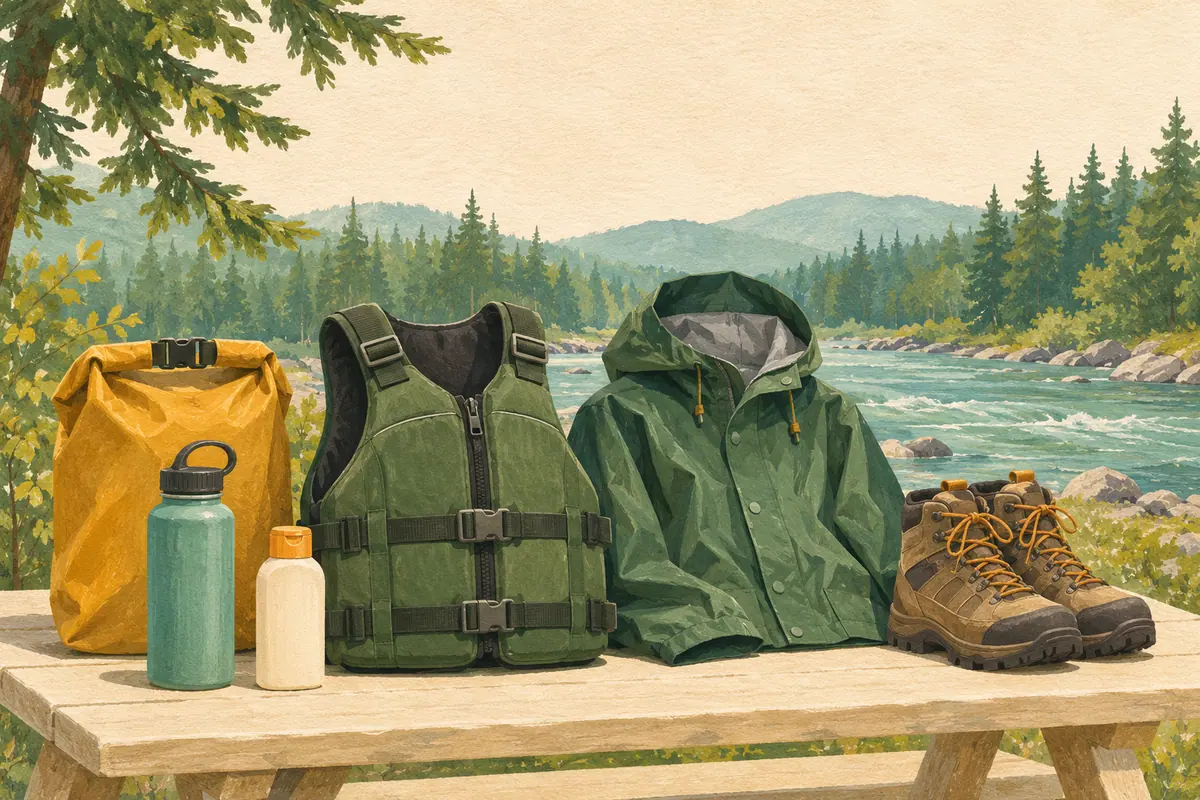
Prepare waterproof outer layers, warm spare clothing, suitable footwear and a dry bag for essentials. Keep your licence, phone and necessary medication protected and accessible. Carry food and drinking water appropriate to the length of the outing. A spare set of clothing in the vehicle can make the journey back much more comfortable.
Do not make deep wading the default
River access and personal capability are different things. Ask about bank surfaces, stairs, current and the route back to the vehicle. Use suitable instruction and equipment for the activity. If conditions exceed your experience, choose another access option or a guided format rather than treating a popular location as proof that it is safe for you.
Make a wildlife plan
Read the relevant land manager’s bear guidance before going. The National Park Service advises stopping fishing if a bear approaches, preventing a hooked fish from splashing and cutting the line if necessary. Learn the recommended food-storage and deterrent practices for the place you will visit. Store food and fish appropriately and keep wildlife away from rewards.
Plan the end of the day too
Bring bags for wet kit and rubbish. If retaining fish is legal, arrange the permitted handling and storage rather than improvising at the hotel. Clean and dry equipment before moving between waters, following local requirements. Check that you have not left line, hooks or packaging where wildlife or other visitors could encounter them.
A compact departure check
Licence and current rules; charged phone and offline route; weather-appropriate layers; water and food; operator instructions; emergency plan; and a legal access point. This list supports preparation rather than replacing instruction, local advice or the operator’s safety briefing.
Sources & further reading
Public sources consulted 4 November 2026. Check the latest agency notices before travelling or fishing.